
How To Budget For A New Car? Tips & Advice

Smart Car Budgeting: A Step-by-Step Guide
Buying a new vehicle from Preston Ford Commercial Vehicle Center is exciting, but it is also a big financial decision. Long before you pick colors or compare trim level options, you should think through how to budget for a new car in a way that fits your life and your future plans. When you look beyond the sticker price and focus on your own numbers, you can keep car shopping focused on a realistic budget instead of guesswork.
This step-by-step guide walks car buyers through how to budget for a new car using clear, practical steps. You will look closely at your monthly income and expenses, understand the total cost of the vehicle, compare financing options, and prepare for ongoing expenses such as fuel costs, auto insurance, and routine maintenance costs. With a solid plan in place, you can visit Preston Ford Commercial Vehicle Center knowing how much to spend on a new car and move forward with confidence.
Start With Your Income and Everyday Bills
The first step in learning how to budget for a new car is to understand your cash flow. Begin by adding up your monthly take-home pay from all sources, including wages, side income, and any regular deposits into your bank account. Looking at monthly income alongside your annual income helps you see the full picture of your financial situation instead of focusing on a single paycheck.
Next, list out your recurring monthly expenses. Include housing, utilities, groceries, subscriptions, child care, and payments on credit cards, student loans, and other obligations. Once you see how much is already committed each month, you can start shaping a monthly budget that includes room for a monthly car payment without crowding out other priorities. Many drivers find it a good idea to keep transportation within a set slice of their spending so car-related expenses do not overwhelm the rest of their goals.
A common good rule you will see in financial advice is to keep all car costs, including fuel expenses, insurance costs, and parking, within a reasonable share of your income. That guideline serves as a good rule of thumb as you decide how to budget for a new car, leaving space for a savings goal and an emergency fund. If the numbers feel tight, adjusting expenses before starting a vehicle purchase can make the entire plan more comfortable.

See the Full Price Beyond the Window
Once your income and bills are clear, the next step in budgeting for a new vehicle is understanding the full cost of car ownership. The sticker price or suggested retail price on a vehicle at Preston Ford Commercial Vehicle Center is an excellent starting point. To understand the total cost, you also need to factor in sales tax based on the local tax rate, registration fees, documentation charges, and other additional costs that show up on the final paperwork.
From there, shift your focus to ongoing expenses that you will face during the life of the loan. Ownership costs, such as auto insurance, routine oil changes, tires, brakes, and other maintenance, all play a role in the vehicle’s cost over time. Fuel economy matters, too; a vehicle with strong fuel efficiency will keep fuel costs and fuel expenses more predictable, while a less efficient model may raise costs each month.
If you are comparing models or different model years, look at how their ownership costs and projected resale values differ. A vehicle with a reputation for durability and solid resale value can help you protect the vehicles’s trade-in value when you return to Preston Ford Commercial Vehicle Center for your next vehicle. Working these details into how to budget for a new vehicle keeps the focus on long-term value, not just today’s price tag.
Plan Your Down Payment and Financing Strategy
With the big-picture costs in mind, the next step in how to budget for a new commerical vehicle is shaping your down payment and financing plan. If you currently own a commercial vehicle, its trade-in value can lower the upfront cost. Knowing this number in advance lets you predict the loan amount you will need to cover the remaining cost of the vehicle.
Your credit score and credit history will influence your loan interest rate, available loan term choices, and approval with different lenders. Many shoppers apply with a local credit union, their own bank, and Preston Ford Commercial Vehicle Center to compare financing options, including offers from third-party institutions. It is helpful to see how a 48-month loan, 60-month loan, or even a longer-term loan changes both the monthly car payment and what you pay over the life of the loan.
As you think through how to budget for a new commercial vehicle, consider whether a larger down payment fits your savings goal. A higher upfront cost can reduce loan payments and loan interest over time, which can free space in your monthly budget for other goals. If the numbers feel tight, it may be wise to give yourself more time to save before committing to a vehicle purchase, especially if you are working toward your first vehicle and still building credit.
Use Online Tools, Credits, and Calculators
Before you visit Preston Ford Commercial Vehicle Center, online resources can help you see how to budget for a new vehicle in real numbers instead of rough estimates. Start with an auto loan calculator or car affordability calculator and enter the sticker price, estimated sales tax, registration fees, and a likely interest rate based on your credit score, then compare those results with our online payment calculator tool to see how different vehicles and loan terms affect your monthly car payment. Adjust the loan term to see how a shorter schedule compares with a longer one and how each affects your monthly budget and overall car costs, so you can narrow in on a price range that feels realistic for your new vehicle without straining your financial situation.
As you compare models, note differences in safety features, trim level, model year, and fuel economy. These factors can influence insurance premiums, ownership costs, and even future resale value. Keeping notes on how each option fits your price range helps you fine-tune how to budget for a new commerical vehicle that aligns with both your financial situation and your driving needs.
Choose the Right Vehicle
Once your numbers are in place, you’ll be ready to bring how to budget for a new vehicle into real life on the lot at Preston Ford Commercial Vehicle Center. Share your target monthly budget, price range, and preferred loan term with our team so they can guide you toward car models that make sense. Whether you are shopping for your first commercial vehicle or upgrading your current ride, staying honest about your limits helps you focus on the right options.
During car shopping, think about how you will use your new vehicle day to day. Consider commute length, traffic patterns, weather, and how often you carry passengers or cargo. For some buyers, compact options with strong fuel efficiency and lower car-related expenses are a smart fit. Others may look at crossovers, trucks, or electric vehicles that support hobbies, family needs, or work demands while still matching how to budget for a new car.
Don’t forget to think ahead to your next vehicle, as well. A model with solid market value and predictable ownership costs can make it easier to trade in your new vehicle in the future. That future trade-in value becomes part of your plan for how to budget for a new car again when it is time to upgrade.
Prepare For Insurance and Local Details
Another key part of how to budget for a new car is understanding how insurance fits into your plan. Before you finalize anything, request quotes from more than one insurance provider. Insurance rates and insurance costs will depend on your driving record, the vehicle you choose, and the safety features it offers. Comparing auto insurance quotes side by side can reveal how car prices and trim level choices influence premiums.
As you review policies, confirm how insurance premiums might change over time and how they fit alongside your other monthly expenses. Building those numbers into how to budget for a new vehicle keeps your plan grounded in reality. You will also want to think about vehicle ownership details such as where you park, how many miles you drive annually, and any car-related expenses that are specific to where you live, like tolls or city parking permits.
Finally, make sure your paperwork expectations line up with your budget. Ask our team at Preston Ford Commercial Vehicle Center to walk you through every line item, including sales tax, tax rate, fees, and any additional costs tied to protections or warranties. When you see the entire structure of the cost of the vehicle and understand exactly how to budget for a new vehicle, you can sign with confidence knowing your plan fits your bank account and your long-term goals.
Put Your Plan Into Action
By taking time to learn how to budget for a new vehicle around your real numbers, you turn a big purchase into a thoughtful step in your financial life. You’ll have looked at monthly income, monthly expenses, and annual income, and have shaped a realistic budget that respects your savings account and emergency fund. You’ll understand how loan amount, loan term, and interest combine with taxes, fees, and ongoing expenses to create the total cost of car ownership.
When you bring that work to Preston Ford Commercial Vehicle Center, you can focus every conversation on how to budget for a new car that fits your priorities instead of reacting in the moment. Whether you are choosing your first car or planning your next vehicle, your preparation helps ensure that your new commercial vehicle supports your lifestyle, your savings goal, and your long-term vehicle ownership plans.

How Your Tax Refund Can Help You Drive Home With a Lower Car Payment
At Preston Ford Commercial Vehicle Center, we meet a lot of drivers who look at their statement and immediately wonder, “how do I lower my monthly car payment?” If you are expecting a tax refund this year, it can be a powerful tool for reshaping your car loan payment and overall personal finance plan. Many shoppers search online for how to get a lower car payment, but the real answers depend on your unique financial situation, your current vehicle, and where you are in the car-buying process. Our goal is to walk you through practical, real-world ways to turn that refund into a smarter car purchase or refinance so you can feel more confident every time you make payments.
Whether you are shopping for a new car, thinking about a reliable used car, or looking to adjust an existing loan, your refund can act like an instant larger down payment or a targeted lump sum toward what you already owe. Using that amount of money wisely can reduce your monthly costs, cut the amount of interest you pay over time, and ease the financial burden that comes with keeping a vehicle in your budget while you stay focused on how to get a lower car payment that truly fits your life.
What a Lower Monthly Payment Really Means for You
When you ask us how to get a lower car payment, we start by looking at the numbers behind your monthly loan payment. The key ingredients are your total loan amount, interest rate, loan term, and any taxes or fees that were rolled into your purchase. Changing even one of these pieces can unlock a lower monthly payment, but each choice affects the overall cost of the vehicle in a different way.
A larger down payment using your tax refund immediately reduces the loan amount and the principal balance, which means you are financing a smaller remaining balance from day one. That can help you qualify for a lower interest rate or a lower rate overall and pay less interest across the full time frame of your contract. If you choose a longer loan term, you will usually see a lower payment each month, but a longer term also increases the amount of interest you pay. A shorter term loan often carries a higher monthly bill, yet it can be a good idea if your goal is to pay less interest and own the vehicle free and clear sooner, especially if your top priority is how to get a lower car payment over the life of the loan.
Your credit report also plays a big part. Drivers with a higher credit score or even excellent credit often qualify for strong auto loan rates, while shoppers with lower credit may face higher interest rates at first. The good news is that as you stay in good standing on your account and avoid missed payments, your profile can improve over time, and that opens doors for future changes that support how to get a lower car payment.
Turning Your Tax Refund Into a Powerful Down Payment
One of the simplest answers to how to get a lower car payment is to bring more money to the table on day one. When you apply your tax refund as part of a larger down payment on a new vehicle or on used vehicles that fit your lifestyle, you shrink the loan amount and reduce the remaining loan balance before you even drive off the lot. That can also reduce the sales tax you pay on your car purchase, depending on how your deal is structured.
Your refund can team up with the trade-in value from your current vehicle to build that down payment. Using tools such as Kelley Blue Book helps you estimate your car’s current value and vehicle’s value so you can walk into the showroom informed and ready to negotiate. If you can sell your vehicle through a private sale for more than the trade figure, that extra cash can go straight toward your down payment and move you closer to your goal of how to get a lower car payment.
In some cases, using part of your refund to pay down your existing loan is the smart move. Reducing your principal balance ahead of schedule can lessen the negative impact of being upside down on the vehicle and may qualify you for gap insurance or strong refinancing terms sooner. Before you do this, talk with our team at Preston Ford Commercial Vehicle Center about any prepayment penalties in your contract, so you know exactly how much of your tax refund is going toward how to get a lower car payment instead of fees.
Using Your Tax Refund to Restructure or Refinance
If your vehicle already fits your needs but the payment doesn’t, your tax refund can help you refinance your auto loan to reshape the terms of your agreement. By paying down part of the balance and then applying for a new loan with different lenders, you may qualify for a lower interest rate. This strategy is especially helpful if you started with a high interest rate due to bad credit, and you have since worked hard to rebuild your profile and learn how to get a lower car payment going forward.
When you sit down to talk with your current lender, they will review your credit report, your recent payment history, and whether you are in good standing. A stronger credit history, fewer hard inquiry entries, and an improved credit score can all make it easier to secure a lower car payment through updated terms. We can also help you compare offers from a local credit union, banks, and other financial institutions so you can see how to get a lower car payment without taking on more risk than you are comfortable with.
Changing the structure of your loan can take several forms. Some drivers look for a loan modification with their existing lender, which might adjust the loan term, payment due date, or fees to ease short-term pressure. Others prefer classic refinancing, choosing a longer loan term to create a lower monthly payment or opting for a shorter term that focuses on paying less interest in the long run. Either way, your tax refund can reduce the remaining balance first, so you end up paying less interest on a smaller principal over the life of the agreement, and stay focused on how to get a lower car payment that fits your budget.

Deciding Whether to Trade, Keep, or Upgrade Your Vehicle
For some guests, the best way to improve their budget is to rethink the vehicle itself. That might mean trading in for one of our top picks of fuel-efficient used vehicles, choosing a modest new vehicle instead of a fully loaded model, or even paying down an existing loan and driving your current car for a few more years. Your tax refund can help with any of these paths, whether you want to boost your trade-in value, reduce your remaining loan balance, or simply save for upcoming maintenance so you can make payments on time while still working toward how to get a lower car payment that feels realistic month after month.
As you compare options, we will walk you through the car-buying steps from a budget-first angle. Together, we can look at your monthly loan payment, expected monthly costs like fuel and insurance, and how your tax refund can lower the car loan payment itself. We also talk through whether you want a short-term plan to simply get through a tough season or a longer loan term that prioritizes a lower monthly payment for the long haul. All of this fits into a bigger car-buying strategy focused on how to get a lower car payment, not just this year but over the life of the vehicle.
Another simple way to lower your car payment over the life of the loan is to use your tax refund to make a few extra payments throughout the year. Even small additional amounts applied directly to principal can shorten your term, reduce the amount of interest you pay, and give you flexibility if you ever face a tight month later on, while still aligning with your plan for how to get a lower car payment in the long run.
Putting It All Together at Preston Ford Commercial Vehicle Center
When you are ready to talk through how to get a lower car payment with your tax refund, our team will start with a simple conversation about your goals. Are you hoping to refinance an existing loan, exploring a new auto loan for a different model, or curious whether a loan modification could help you stay in good standing with your current lender? Do you want to focus on less interest paid, a lower interest rate, or a shorter term that clears the balance quickly? Your answers guide us toward the combination of commercial vehicle purchase choices and financing options that match your financial position.
We also explain how different lenders look at your credit report, credit history, and recent activity. If you are aiming for a refinance in the near future, making on-time payments, avoiding new hard inquiry marks unless necessary, and keeping your accounts in good standing can all improve your chances of qualifying for a lower rate. Over time, this can translate into a noticeably lower car payment and give you more room in the budget for other priorities tied to lowering your car payment.
Your tax refund is a powerful tool, and when you pair it with clear advice, it can move you closer to how to get a lower car payment in several ways at once. Whether that means putting the money toward a larger down payment on a new vehicle, using it to chip away at the principal balance on an existing loan, or exploring auto refinancing with a credit union or other financial institutions, our team at Preston Ford Commercial Vehicle Center is here to help you choose the path that feels like a good option for your life.

Making a Down Payment on a Car: Saving On Your Monthly Payment
When tax season hits and that refund lands in your account, it is completely normal to start wondering if you should put a down payment on a vehicle or keep that cash tucked away. For many car buyers, that once-a-year money is the perfect excuse for a new vehicle purchase or an upgrade to a newer, safer model. The key is deciding whether turning your tax refund into a payment for a car is a smart financial decision for you.
A down payment shapes your monthly car payment and the total cost of the vehicle over the life of the loan. Whether you are eyeing a new vehicle or a used car, using your tax refund as part of the down payment can change your loan balance, loan-to-value ratio, and even the annual percentage rate you qualify for. In other words, answering the question, “should you put a down payment on a car with your tax refund?” can have a big impact on both your short-term budget and your long-term personal finance goals. This guide from Preston Ford Commercial Vehicle Center will help you weigh the pros and cons of a large down payment on a car before you make the drive to our commercial vehicle dealership and start the car-buying process. Visit us today!
What Is a Down Payment and Why Does It Matter?
A down payment is the initial amount of money you pay up front when purchasing your car. This upfront payment reduces the cost of the vehicle you need to finance, which lowers the loan balance and the payment amount you will owe each month. Whether you are buying a new car or shopping for used vehicles, your down payment can come from cash, your tax refund, the trade-in value of your old car, or a combination of all three.
By putting money down at the time of your vehicle purchase, you signal commitment and stability to lenders who are reviewing your credit history, credit rating, and overall financial situation. They usually see a substantial down payment as lower risk, which can lead to better loan terms and a low interest rate or lower rate compared to someone who puts less money down. For borrowers with excellent credit, a strong down payment can help unlock the very best financing options the lender offers.
If you are asking yourself whether you should put a down payment on a car with your tax refund, remember that those dollars can instantly improve the value ratio between the loan and the car’s value. A stronger loan-to-value ratio not only improves your loan conditions but can also help you qualify for better terms in the future when you shop for your next car.

How Down Payments Affect Car Financing
Making a down payment changes your car financing in several important ways, and there’s much to consider in deciding if you should put a down payment on a car. First, it lowers monthly payments by reducing the principal you borrow. A smaller balance means a more manageable monthly loan payment that is easier to fit into your monthly income. For many drivers, this is the biggest reason they decide to put a down payment on a car instead of financing the entire price.
Second, a down payment improves the loan-to-value ratio. Since lenders are financing less money relative to the car’s value, they see the loan as less risky. That can translate to a lower interest rate, fewer payment requirements, and sometimes a shorter loan term if you choose to pay the car off more quickly. Over the long run, this typically reduces overall interest paid on the loan.
A healthy down payment also helps you avoid negative equity, where you owe more than the cash value of the car. When deciding if you should put a down payment on a car, you should remember that negative equity is more likely with long car loan terms and higher interest rates, especially if you have bad credit or a low credit score. Once again, that tax refund can help you decide if it is better to put more money down on a car now so that you are better protected later.
Benefits of Making a Down Payment With Your Tax Refund
Using your tax refund as a down payment on your new vehicle or used car offers several built-in benefits. An immediate perk is a lower monthly payment on your car, which frees up room in your budget. That extra breathing space can be redirected toward building an emergency fund, paying down a student loan, tackling high-interest credit card balances, or anything else that helps your financial situation.
A down payment can also help you qualify for a better interest rate, especially if lenders see a pattern of responsible behavior in your credit history and credit rating. When they see you are willing to bring a sizable down payment from your own funds, such as your tax refund, they may offer a more competitive annual percentage rate. Over the life of the loan, this means less interest and lower total cost. In many cases, it simply makes financial sense to direct some of that refund toward your car payment, and whether you should put a down payment on a car.
There is also a big asset protection benefit, as cars tend to depreciate quickly, particularly in the first years after a new car purchase. Putting money down helps you stay ahead of that depreciation. If you ever need to sell or trade in early, a strong down payment reduces your risk of being upside down on the loan. When you think through whether you should put a down payment on a car using your refund, this early equity is one of the most underrated benefits.
How Much Should You Put Down on a Car?
General Rules for New and Used Cars
A general rule many experts use is 20% down on a new commercial vehicle and 10% down on a used model. For a new vehicle, a 20% down payment is considered a good down payment because it offers protection from rapid depreciation and can help secure favorable loan terms. For a used car, a 10% down payment often balances a comfortable upfront cost with solid loan conditions, especially when the average price of the car is lower.
If you are debating whether you should put a down payment on a car or keep more cash in the bank, your tax refund can act like a shortcut to those percentages. For example, if your refund equals about 10% of the car’s price, you already have a strong starting point, and you can add your trade-in value to build an even stronger down payment.
Factors to Consider for a Good Down Payment
Even when you know roughly what a good down payment looks like, it is important to consider the size of your down payment in the context of your entire financial situation. Your savings account, emergency savings, and existing debts all influence whether a large down payment is a good idea for you right now.
You might start with a simple question: “How much should a car down payment be for my budget?” An auto loan calculator can help you see how the size of your down payment changes your monthly loan payment, car loan length, and overall interest paid. Looking at these numbers side by side can make it much easier to decide whether you should put a down payment on a car with your refund or keep some of that money liquid for other priorities.
The Pros and Cons of a Large Down Payment
A bigger down payment can feel empowering, but there are real trade-offs worth weighing. Understanding whether it’s better to put more money down on a car keeps you from making a decision based on emotion alone.
On the positive side, a large down payment or substantial down payment typically means a lower monthly payment, less interest over the life of the loan, and a better loan-to-value ratio. All of this can help you secure better loan terms, protect against negative equity, and enjoy more predictable costs in the long run. Many car buyers who can bring a large down payment from a tax refund appreciate how it lowers monthly payments and gives them more room in the rest of their budget.
However, there are also disadvantages to a large down payment on a car. Tying up too much of your tax refund in your car can leave you short on emergency savings, which may create stress if a job change, medical bill, or home repair pops up. Another downside is that putting a large amount into a rapidly depreciating asset can limit how quickly you build wealth elsewhere. When you ask yourself again whether you should put a down payment on a car as big as possible, remember that there is such a thing as putting down too much, especially if it empties your safety net.

Leasing vs. Financing and Your Tax Refund
Leasing and financing treat down payments using tax refunds a little differently. With leasing, your tax refund might cover your upfront costs, the first few payments, or reduce the payment amount slightly. Since leasing is essentially renting, you do not build equity, and your primary focus is usually keeping your monthly car payment low and predictable.
Financing, on the other hand, turns that refund into real equity. When you finance and decide that you should put a down payment on a car using your refund, you are choosing to own the vehicle at the end of the term. A stronger down payment when financing can help you secure favorable loan terms, shorten your car loan length, and reduce overall interest paid. Since a car loan is a financial product, you want to structure it in a way that aligns with how long you plan to keep the vehicle and how much flexibility you want in the rest of your budget.
In both cases, understanding the average price of the models you are considering and how the down payment changes your monthly car payment is essential. Our dealership will walk you through the numbers so you can see exactly how your tax refund affects each scenario before you decide whether you should put a down payment on a car with it.
Ready to Put a Down Payment on a Car With Your Tax Refund?
Truthfully, there is no single answer that fits every driver. For many people, using at least part of a tax refund for a down payment is a good idea, especially if it helps avoid negative equity and brings lower monthly payments within reach. Before you decide definitively whether you should put a down payment on a car with all or part of your tax refund, take a moment to compare offers, consider different financing options, and run the numbers.
If you want to keep digging into these topics, visit Preston Ford Commercial Vehicle Center’s finance team for more resources on down payments, interest rates, and budgeting for your next car. With the right information in hand, you can turn this year’s tax refund into a smart move for both your car and your overall financial health. Visit us today!

Your Tax Refund, Your Dream Drive
Tax season is here, and it’s the perfect time to take advantage of tax season car deals. Whether you’re looking for a new vehicle or exploring pre-owned cars, this time of year brings plenty of special offers and incentives for car buyers. From cash back options to lower interest rates, there’s never been a better time to upgrade to your next vehicle. Car dealerships will often roll out their best deals during tax time, making it easier to find the perfect vehicle for your needs. With opportunities to use your income tax return for a down payment or explore financing options, tax season offers an ideal chance to save on a commercial vehicle. Shop our current specials and latest offers at Preston Ford Commercial Vehicle Center to get the best price and drive away with a great deal.
Why Tax Season Is the Best Time to Shop for a New Ride
Use Your Income Tax Return Wisely
Tax season is a great time to put your income tax return to good use by investing in your next vehicle. Applying extra money from your tax refund toward a down payment can significantly lower the purchase price or monthly payments for your new ride. This approach can make owning your dream car more affordable while giving you a fresh start for the year. Whether you’re searching for a new vehicle or a pre-owned vehicle, using your tax refund strategically can maximize your savings during the car-buying process.
Special Tax Season Offers at Preston Ford Commercial Vehicle Center
Limited-time offers are often introduced during tax season to attract car shoppers. Our current offers may include cash-back incentives, lease offers, and low-interest financing options. Taking advantage of these special deals can help you find the perfect vehicle at a lower cost, whether it’s new or pre-owned. With a wide selection of models available, tax season is the perfect time to explore vehicles that suit your personal use.
Fill out a credit application today to get started and speak with our team about getting the most out of car deals during tax season. Don’t miss the opportunity to secure a great deal while these offers last!

Explore the Best Deals on New and Used Vehicles
If you’re in the market for a new vehicle, tax season is the ideal time to browse the latest models. Search vehicles equipped with cutting-edge technology and advanced safety features designed to enhance your driving experience. Once you’ve found a model that fits your needs, schedule a test drive to ensure it’s the perfect vehicle for you. A test drive helps you experience the car’s performance, comfort, and features firsthand. With tax season car deals in full swing, now is the best time to upgrade to a new ride that checks all your boxes.
Pre-Owned Cars and Trade-In Opportunities
For those seeking value and reliability, pre-owned vehicles offer an excellent alternative to new vehicles. Certified pre-owned vehicles often come with warranties and thorough inspections, giving you peace of mind with your purchase. During tax season sales, you’ll find some of the best prices on pre-owned commercial vehicles, making it a great time to invest in a quality vehicle without breaking the bank.
Don’t forget to consider trade-in opportunities for your current vehicle. We offer competitive trade-in values, which can further reduce the cost of your next vehicle. By trading in your used car, you can offset the expense of upgrading and make the most of your tax season savings.
Tips for Car Shoppers During Tax Time
How to Make the Most of Tax Season Savings
To maximize your savings during tax season, it’s important to plan your car-buying process carefully. Start by consulting a tax professional to understand available tax deductions and credits. These benefits can help lower your overall expenses and make your next vehicle more affordable.
When exploring financing options, look for terms that offer lower monthly payments or beneficial lease deals. Our special offers during tax time allow you to upgrade to a better vehicle without exceeding your budget. Whether you’re interested in long-term ownership or a short-term lease, this is a great time to secure a deal that works for you!
Browse Our New Vehicle Specials During Tax Season
While tax season brings additional opportunities to save, it’s also the perfect time to explore our New Vehicle Specials—updated frequently with offers that change based on availability, incentives, and manufacturer programs. These specials aren’t limited to tax-season-only promotions, but shopping them during tax time can work in your favor. Combining current vehicle specials with your tax refund or trade-in value can help you unlock even greater savings on your next vehicle.
You can browse our latest offers online to compare pricing, incentives, and available models in real time with absolute ease. Since these specials are refreshed often, checking back regularly ensures you won’t miss a deal on a vehicle that fits your needs and budget. Whether you’re planning to buy now or still researching your options, tax season is an ideal time to explore our most up-to-date new vehicle specials and take advantage of the offers available today.

Why Preston Ford Commercial Vehicle Center Stands Out
Our team is dedicated to helping car buyers find the perfect vehicle at the best time. Whether you’re looking to test drive a car, trade in your current vehicle, or explore financing options, we’re here to assist you every step of the way. We also offer convenient service hours to make car shopping as stress-free as possible. You can easily schedule test drives or trade-in evaluations at your convenience. With an unwavering commitment to customer satisfaction, we strive to make your tax season car-buying experience enjoyable and rewarding.
Make the Most of Tax Season Car Deals in 2026
Don’t let tax season pass you by without taking advantage of our incredible car sales and special offers. Use the extra money from your refund to secure a great deal on a new vehicle or pre-owned car. With options like cash back, lower interest rates, and lease offers, this is the perfect time to upgrade your ride.
Act quickly, as these limited-time deals won’t last forever. Visit Preston Ford Commercial Vehicle Center to view our inventory, take a test drive, and find the perfect vehicle for your needs. View our current new and pre-owned specials online!
Start the year right with a car-buying experience that combines value, convenience, and exceptional savings!

The Ultimate Commercial Van Comparison
When searching for the perfect commercial vehicle, comparing the Ford Transit vs. Ram ProMaster vs. Chevy Express is essential to finding a van that fits your specific needs. Each model offers unique strengths in terms of engine options, cargo capacity, and overall functionality, making them top choices for businesses and personal use alike. Whether you’re seeking a versatile work van or a reliable conversion van from Preston Commercial Vehicle Center, understanding the differences can help you make an informed decision.
This guide will take a closer look at the performance, dimensions, safety features, and fuel economy of these commercial cargo vans. By examining their advantages and trade-offs, you’ll discover which van is best suited for your business needs, budget, and lifestyle. Let’s dive into the ultimate comparison of these top contenders in the commercial van market.
Engine Options and Performance
Ford Transit: Power Meets Efficiency
The Ford Transit stands out for its impressive engine options and emphasis on performance. It comes standard with a 3.5L PFDi V6 engine, known for its reliability and balance of power with 275 horsepower and 260 lb.-ft. of torque. For those seeking enhanced performance, the available 3.5L EcoBoost® V6 engine delivers 300 horsepower and 400 lb.-ft. of torque, ensuring the Ford Transit is up for any challenge, whether at job sites or on long drives. This engine also excels in fuel economy, making it a great choice for businesses conscious of operational costs.
A key feature of the Ford Transit is its 10-speed automatic transmission, which provides smooth shifting and helps optimize both power and fuel efficiency. Additionally, the Ford Transit offers an available Intelligent All-Wheel Drive system, giving it better traction and stability on rough terrains or in adverse weather conditions. This makes the Ford Transit ideal for hauling heavy loads or working in areas with unpredictable road conditions. For towing capacity, the Ford Transit is a reliable workhorse that can handle demanding tasks without compromising comfort or fuel efficiency.
Another advantage is the EcoBoost engine’s ability to combine power and efficiency, making it an excellent option for those who need high performance without sacrificing fuel economy. Whether used as a work van or a camper van, the Ford Transit delivers a dependable driving experience that aligns with various business and lifestyle needs.

Ram ProMaster and Chevy Express: Key Comparisons
The Ram ProMaster takes a different approach with its 3.6L V6 gas engine paired with a front-wheel drive configuration. This setup is particularly advantageous for those prioritizing maneuverability in urban areas or tight spaces. The Ram ProMaster’s front-wheel drive offers a lower load floor, which simplifies the process of loading and unloading cargo. While it doesn’t offer the same towing capacity as the Ford Transit, it excels as a reliable commercial vehicle for tasks that require efficient use of space.
When it comes to balancing power, capability, and day-to-day efficiency, the Ford Transit pulls ahead of both competitors. With two engine options, the Ford Transit lets you choose the right level of muscle for your workload. Add in a maximum payload of 5,103 lbs., and Ford Transit proves it’s engineered to work harder without sacrificing efficiency or drivability.
The Ram ProMaster offers a capable 276-horsepower V6 and earns points for versatility with multiple roof heights and cargo lengths. However, its single-engine setup limits power flexibility compared to the Ford Transit’s tailored approach.
The Chevy Express brings traditional strength with its standard 4.3L V6 and an available 6.6L V8 that delivers impressive output and trailering capacity. While powerful, the V8 option prioritizes raw strength over balanced performance, modern efficiency, and cargo-focused engineering that many businesses need on a daily basis.
Overall, the Ford Transit stands out as the most well-rounded choice—offering strong power where it counts, customizable performance options, and a payload advantage that makes it the smart, future-ready van for growing businesses.
Dimensions, Cargo Space, and Customization
Ford Transit: Adapting to Your Business Needs
The Ford Transit offers exceptional flexibility in terms of dimensions and cargo space, making it an excellent choice for businesses with diverse requirements. With roof heights available in low, medium, and high options, as well as lengths in regular, long, and extended models, the Ford Transit can be tailored to meet a wide range of commercial and personal needs. The extended high-roof option, for instance, provides maximum cargo volume, perfect for transporting large items or setting up a camper van conversion.
Customization is another area where the Ford Transit shines. The cargo area can be outfitted with shelving, wheel well liners, and other organizational features to suit specific business needs. Whether you’re running a delivery service or converting the Ford Transit into a mobile office or camper van, its adaptability ensures it can handle the job. The high-top roof configurations are especially beneficial for those who need ample headroom or extra storage space.
Additionally, the Ford Transit’s thoughtful design includes features like a flat load floor, making it easier to move heavy or bulky items in and out of the vehicle. Combined with its customizable cargo area, the Ford Transit is a top choice for businesses that require a versatile, reliable commercial van.
Comparing Ram ProMaster and Chevy Express Dimensions
The Ram ProMaster is designed with practicality in mind, offering a lower load floor that makes it easier to access the cargo area. This feature is handy for businesses that frequently load and unload goods, such as delivery services. While its cargo volume may not match the spaciousness of the Ford Transit, the Ram ProMaster still provides ample room for most commercial tasks. It also comes in various configurations to suit different business needs, though its customization options are more limited compared to the Ford Transit. The Chevy Express, while compact and straightforward, falls behind in terms of flexibility and cargo space. Its traditional design offers fewer customization options, which may be a drawback for those looking to adapt their van for specialized purposes.
Technology and Safety Features
Ford Transit: Leading the Way in Safety and Tech
The Ford Transit excels in providing advanced technology and safety features that enhance both driver convenience and passenger security. One of its standout features is the Ford Co-Pilot360® suite, which includes Lane Keep Assist and Forward Collision Warning. These systems are designed to reduce the risk of accidents by helping drivers stay within their lanes and alerting them to potential collisions. For businesses managing fleets, these safety features provide peace of mind and help protect valuable assets and personnel.
The Ford Transit also boasts a SYNC® 4 infotainment system with a large 12-inch touchscreen, offering easy access to navigation, satellite radio, and Apple CarPlay® integration. These tech features not only make long drives more enjoyable but also ensure drivers remain connected and informed while on the road. The backup camera and Blind Spot Assist further enhance safety by improving visibility and awareness of the surroundings, especially when navigating tight spaces or reversing.
Adaptive Cruise Control and Ford Pro™ Telematics are additional highlights that cater to commercial needs. While Adaptive Cruise Control adjusts speed based on traffic, Ford Pro™ Telematics provides fleet management tools to monitor vehicle performance, location, and fuel efficiency. Furthermore, the Ford Transit is backed by a powertrain warranty, ensuring long-term reliability and reduced maintenance concerns.
Ram ProMaster, Chevy Express, and Other Vans
The Ram ProMaster offers basic but reliable safety features, including brake assist and stability control. While these are essential for any commercial vehicle, the Ram ProMaster lacks some of the advanced technologies seen in the Ford Transit, such as Lane Keep Assist or Blind Spot Assist. This makes it a solid option for businesses that prioritize affordability over cutting-edge tech features.
In comparison, the Chevy Express offers upgradable Forward Collision Alert and Hill Start Assist, which help enhance safety but fall short of modern innovations. Its design prioritizes simplicity, catering to businesses that need a no-frills work van. However, the absence of advanced safety systems may be a drawback for those looking to invest in future-proof technology for their fleet.

Fuel Economy and Maintenance Costs
Ford Transit: Efficiency Without Compromise
When it comes to fuel economy, the Ford Transit strikes an excellent balance between performance and efficiency. Its available EcoBoost® engine is a major highlight, providing superior fuel efficiency without sacrificing power. This is particularly important for businesses that rely on daily commutes or extended trips, as reduced fuel consumption translates to significant cost savings over time.
For those looking for even greater efficiency, the Ford Transit offers an optional extended-range 31-gallon fuel tank, which minimizes the need for frequent refueling. This is a practical feature for businesses that operate in areas where fuel stations may be sparse or for drivers who cover long distances regularly. Additionally, the Ford Transit’s advanced engineering ensures lower maintenance costs compared to some competitors, making it a cost-effective choice in the long run.
The Ford Transit’s combination of fuel efficiency and reduced maintenance costs makes it an appealing option for businesses focused on minimizing operational expenses. Whether it’s used as a work van or a passenger van, the Ford Transit delivers dependable performance while keeping costs manageable.
Chevy Express and Ram ProMaster: Fuel Economy Insights
The Chevy Express, while reliable, falls behind in terms of fuel economy. Its older design and lack of modern efficiency-focused features result in higher fuel consumption compared to the Ford Transit. Additionally, the Chevy Express is known for higher maintenance costs, which can add up over time, especially for businesses that require a dependable fleet of vehicles. While its price point may be appealing up front, the long-term operational expenses may offset the initial affordability.
The Ram ProMaster fares better with its front-wheel drive system, which contributes to slightly improved fuel efficiency in urban environments. The compact Ram ProMaster City is particularly noteworthy for businesses operating in city settings, as its smaller size and fuel-efficient engine make it an economical choice for urban routes. However, the absence of four-wheel drive in most models can be a limitation for businesses that operate in rough terrains or snowy conditions.
Overall, the choice between these vans depends on your specific needs and operational priorities. If fuel efficiency and lower maintenance costs are high on your list, the Ford Transit stands out as the most balanced option. Meanwhile, the Chevy Express and Ram ProMaster cater to different niches, offering affordability and practicality for less demanding applications.
An Electric Edge
Beyond gas-powered capability, Ford extends its advantage with the Ford E-Transit, giving businesses a forward-looking option that competitors simply can’t match. Designed for fleets ready to reduce emissions without sacrificing productivity, the Ford E-Transit is powered by a 266-horsepower electric motor paired with an 89-kWh lithium-ion battery, delivering an estimated range of up to 159 miles—ideal for urban routes, last-mile deliveries, and predictable daily schedules. It maintains the same work-ready flexibility as the Ford Transit lineup, offering cargo, chassis cab, and cutaway configurations. Ford Pro™ connectivity adds real-time telematics, remote diagnostics, and smart charging tools to help maximize uptime. As part of Ford’s expanding commercial EV strategy, the Ford E-Transit positions Ford Transit as the clear leader—offering both traditional power and a zero-emissions solution built for the future of business.
Top Picks for Your Business Needs
Choosing the right commercial vehicle ultimately comes down to matching the van’s capabilities with your specific needs and budget. The Ford Transit emerges as the most versatile option, offering advanced features, multiple configurations, and exceptional customization. Whether you need a reliable work van, a camper van, or a conversion van, the Ford Transit provides the adaptability to handle a wide range of tasks. Its superior fuel economy, modern safety features, and customizable cargo area make it a top choice for businesses and individuals alike.
The Ram ProMaster is an excellent option for those who prioritize front-wheel drive and ease of use in urban environments. Its lower load floor makes cargo access more convenient, and its compact design is ideal for navigating tight spaces. While it may lack some of the advanced tech and safety features of the Ford Transit, it remains a practical and affordable choice for smaller businesses or those with less demanding requirements.
Meanwhile, the Chevy Express is best suited for buyers seeking an affordable, no-frills commercial van. Its straightforward design and range of V6 and V8 engine options make it a dependable workhorse for traditional hauling and towing tasks. However, its dated technology and limited customization options may be less appealing to those seeking a more modern or versatile vehicle.
Choose A Winner
From its flexible cargo configurations to its confident road manners, the Ford Transit delivers a balance of capability and comfort that shows up where it matters most—on the job. Experiencing it firsthand at Preston Ford Commercial Vehicle Center helps bring the specs to life, proving that when a van is designed to adapt, support growth, and keep work moving, it becomes more than transportation. It becomes a business asset. Visit our dealership for more information and view our inventory today!
Which Truck Reigns Supreme?
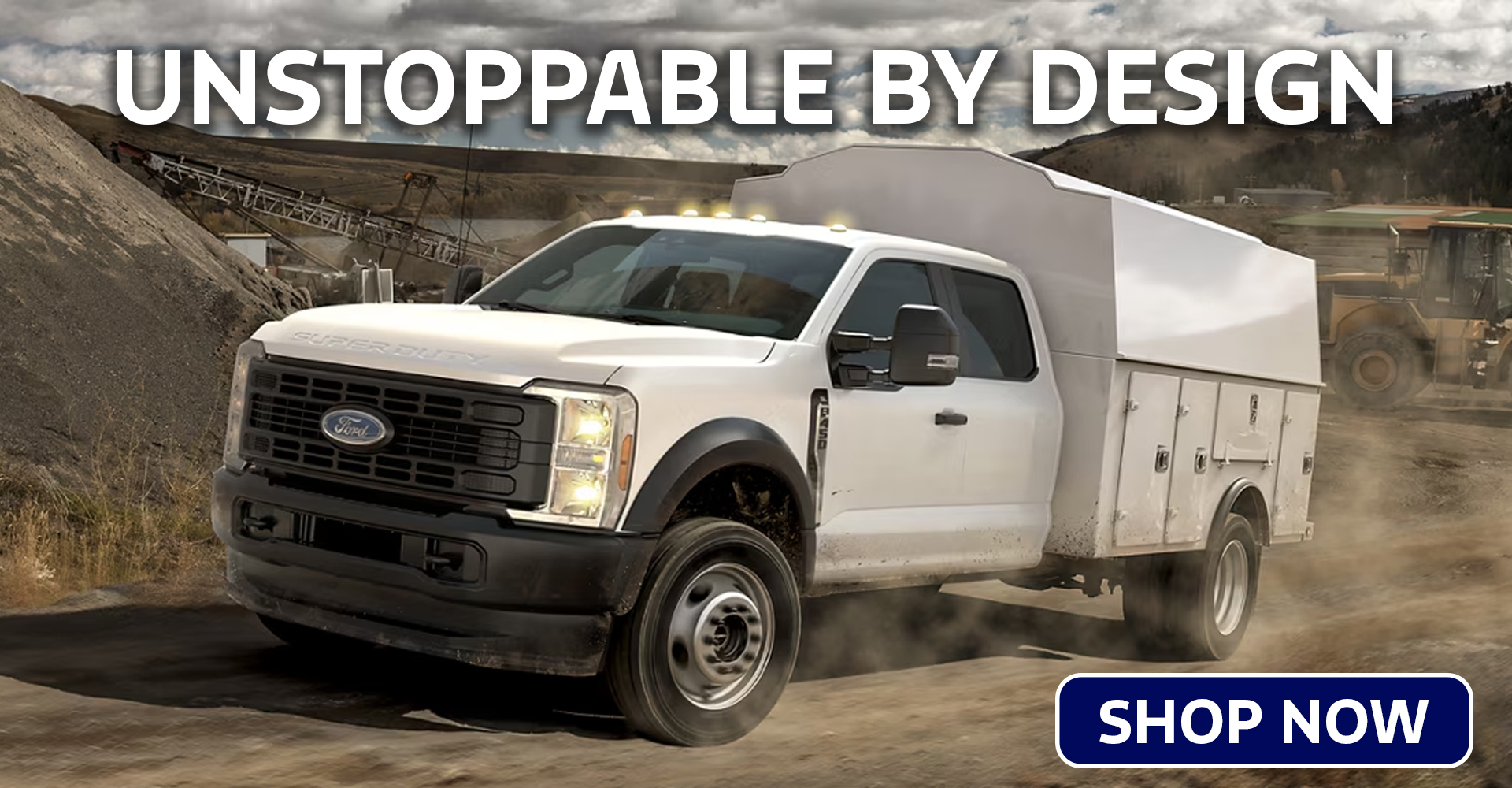
Choosing between the Ford F-450, Ram 4500, and Chevy Silverado 4500 is no small task. These trucks are engineered for serious work—towing a 5th wheel, hauling a toy hauler, or supporting round-the-clock commercial operations. But every buyer has different priorities, and understanding each model’s strengths, limitations, and everyday usability is the main reason smart shoppers do their homework before investing in a new truck. This comparison breaks down towing and payload capacity, engine performance, gear ratios, rear axles, and other key features, including touchscreens, tow/haul functions, automatic transmission options, and more. Whether your needs fall under commercial or non-commercial use, our guide helps you pinpoint which truck aligns best with your work and lifestyle. Keep reading to see why the Ford Super Duty F-450 is the most well-rounded choice and see it in action at Preston Ford Commercial Vehicle Center.
Ford Super Duty F-450: The Ultimate Workhorse
Power That Redefines the Segment
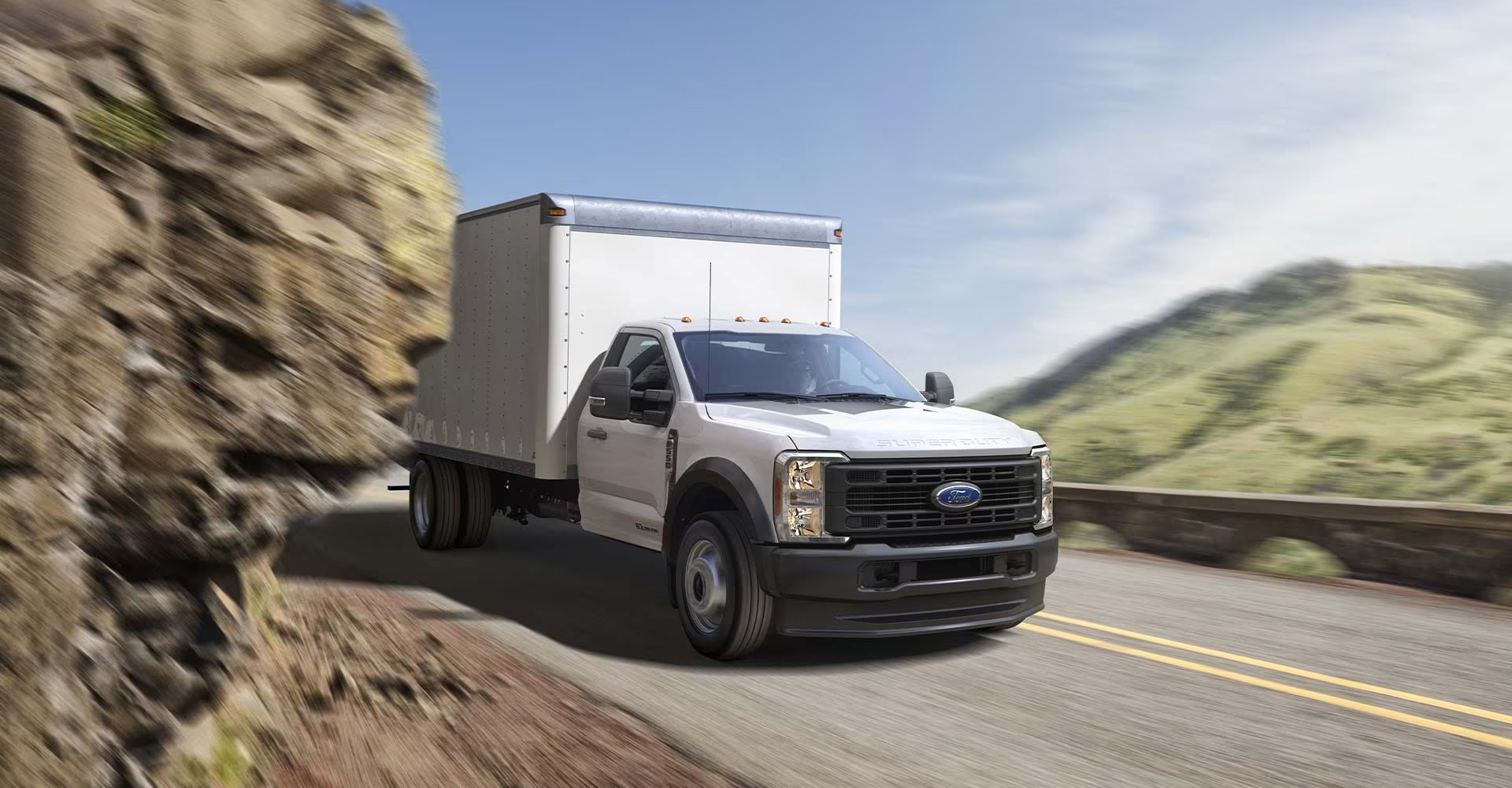
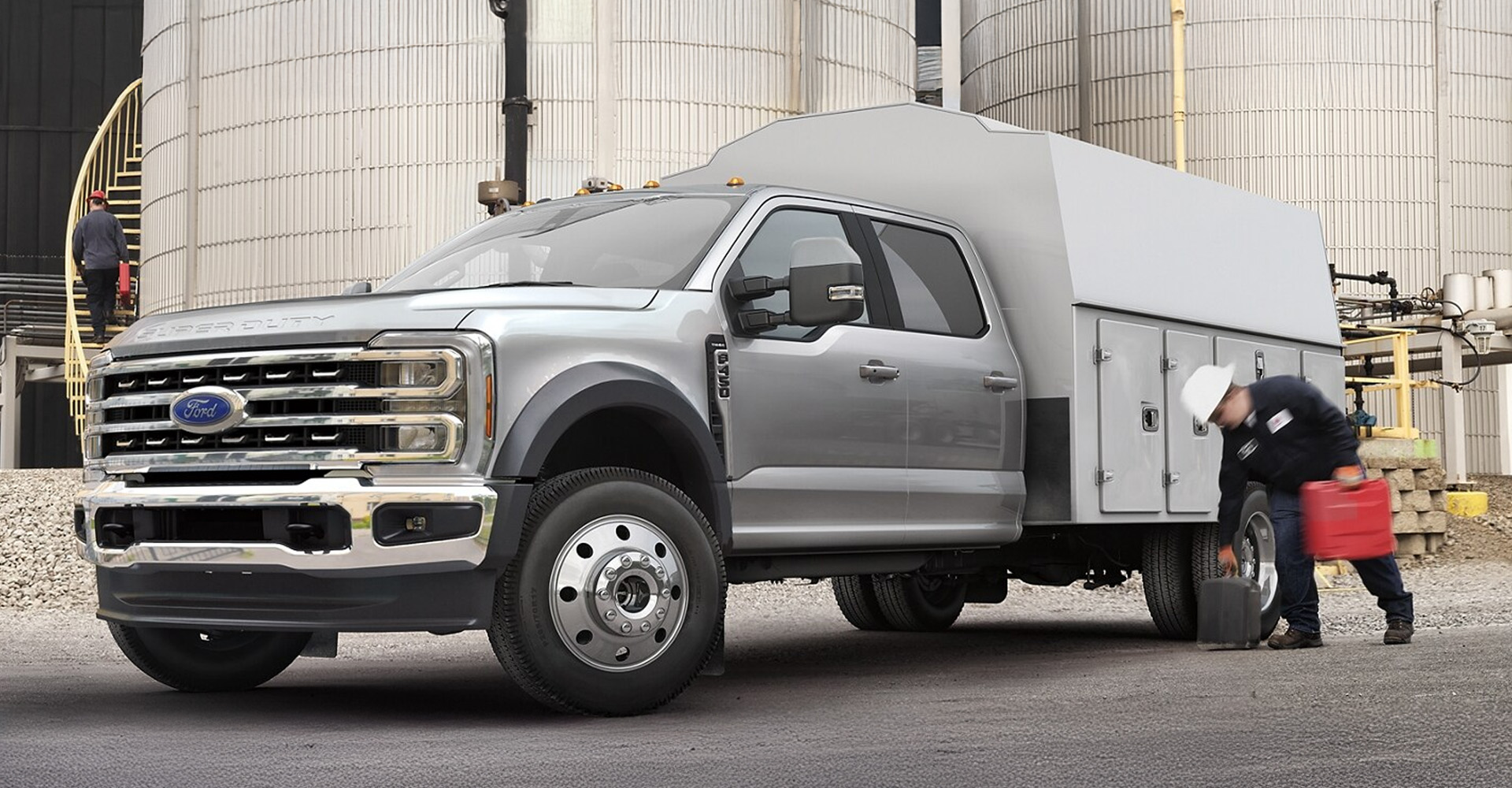
The Ford Super Duty F-450 consistently dominates when towing is the priority. With a commanding Power Stroke® Turbo Diesel engine, lower gears, and class-leading torque ratings, it delivers much power and unmatched confidence when pulling a 5th wheel or heavy equipment. Its towing capacity and payload capacity sit at the top of the segment, easily surpassing those of the Chevy Silverado 4500 and Ram 4500. The available Crew Cab option provides work crews with the space they need, while the Regular Cab model streamlines capability for contractors who prioritize maximum bed space. The Ford Super Duty F-450’s durability is boosted by sturdy rear-end engineering and optimized rear axles that support severe-duty hauls.
Enhanced Experience, Inside and Out
Ford pairs brute strength with comfort and technology. A modern touchscreen system elevates the interior and helps drivers stay connected without distraction. When towing, the Tow/Haul mode and responsive automatic transmission put you firmly in control on steep grades or tricky terrain. Even its maneuverability shines—thanks to a tighter turning radius, the Ford Super Duty F-450 glides through job sites, parking lots, and even crowded fuel stops more effortlessly than rival trucks in the same class.
A Smart Buy
Ford sweetens the deal with strong financing options, giving both business owners and everyday buyers more flexibility. When you stack capability, technology, and value, the Ford Super Duty F-450 consistently offers a superior experience compared to the competition. Be sure to check out Section 179 to see how you and your business can save money.
Ram 4500: Plenty of Muscle, With Some Trade-Offs
Where It Performs Well
Armed with a dependable HEMI® engine, the Ram 4500 puts up respectable torque ratings and can confidently tow and haul for most job types. For buyers whose tasks follow a similar manual process day-to-day—such as construction, agriculture, and municipal fleets—Ram’s simplicity and sturdy engineering get the job done.
Where It Falls Short
The Ram 4500 often delivers less horsepower and overall power than the Ford Super Duty F-450, which becomes noticeable when towing a heavy toy hauler or large 5th wheel. It also trails its rivals in cabin technology—its touchscreen features and infotainment options feel dated compared to Ford’s.
Chevy Silverado 4500: Dependable but Limited
What the Chevy Silverado 4500 Does Well
The Chevy Silverado 4500 is known for rugged simplicity. Its durable rear end, steady automatic transmission, and no-nonsense design make it appealing for buyers who want dependable performance without unnecessary extras. It’s a solid pick for businesses that prioritize basic capability over cabin technology.
Where It Comes Up Short
Compared with the Ford Super Duty F-450, the Chevy Silverado 4500 delivers less horsepower and significantly lower towing capacity. It also lacks modern trailer features—no advanced tow/haul systems, limited touchscreen options, and minimal digital support tools like tracking tools or enhanced ad-related tech integrations. For heavy haulers, fleet managers, or buyers wanting more than the essentials, those limitations are hard to overlook.
What to Consider Before Choosing Your Truck
Towing & Payload
If your routine includes towing a 5th wheel, toy hauler, or commercial trailer, prioritize towing capacity and payload capacity. Here, the Ford Super Duty F-450 is the clear leader, followed by the Ram 4500, with the Chevy Silverado 4500 bringing up the rear.
Powertrain & Ratios
Evaluate gear ratios, engine type, and available automatic transmission setups. The Ford F-450’s Power Stroke® Diesel and optimized lower gears noticeably outperform the Ram’s HEMI® engine and Chevy’s more conservative tuning.
Tech & Convenience
Today’s buyers value tech—from touchscreens to fleet-friendly digital tools. Ford leads, Ram is functional but basic, and Chevy is the most minimal.
Financing Options
The Ford Super Duty F-450 often offers the broadest financing options, which is helpful when upgrading from a Ford Super Duty F-350 or planning long-term fleet purchases.
Why the Ford Super Duty F-450 Stands Above the Rest
After comparing the Ford F-450 vs. Ram 4500 vs. Chevy Silverado 4500, the F-450 continues to set the bar for strength, reliability, technology, and daily usability. Its combination of Turbo Diesel engine performance, superior towing capacity, modern cabin technology, and flexible financing options simply delivers more. For buyers who want a truck that’s powerful, technologically advanced, and built to handle serious work, the Ford Super Duty F-450 remains the standout choice—an easy top pick in any collective work comparison of heavy-duty trucks. Visit Preston Ford Commercial Vehicle Center to learn more about the Ford F-450 and get an up-close look at the truck that can do it all.
Ford F-650 vs. Chevy Silverado 6500

Differences Among Medium-Duty Trucks: Ford vs. Chevy
For businesses searching for a dependable work vehicle, comparing the differences between Ford F-650 vs. Chevrolet Silverado 6500 is an important step toward choosing the right tool for the job. These medium-duty trucks offer impressive strength, durability, and payload capabilities designed to support demanding industries. Whether your priority is towing performance, chassis versatility, or overall refinement, the Ford F-650 vs. Chevy Silverado 6500 each bring something unique to the table. Understanding their distinctions helps truck owners match the right model to their daily workflow. When you’re ready, visit Preston Ford Commercial Vehicle Center to make a decision!
Why These Trucks Matter
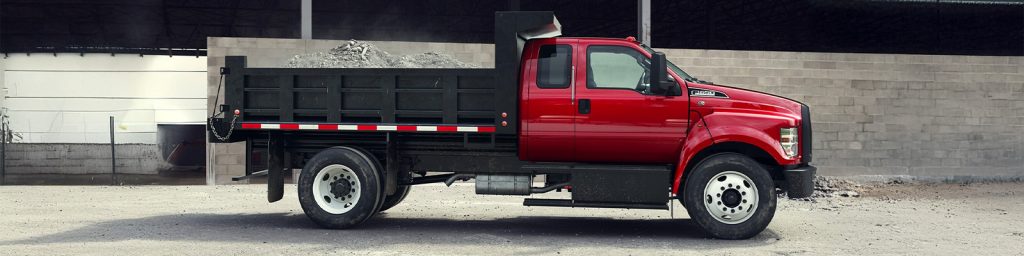
Medium-duty trucks deliver essential capability for businesses that rely on consistent performance. The F-Series Ford truck and Chevy Silverado 6500 are engineered for commercial use, offering strong frames, powerful engines, and configurations that suit everything from construction to towing to delivery. They support a wide range of upfits, including box trucks, flatbeds, and even hooklift truck configurations that enable rapid attachment swaps. With options like crew cab layouts for transporting work teams and heavy equipment, the Ford F-650 vs. Chevy Silverado 6500 provide the versatility companies expect. Built for long days and heavy use, they remain trusted choices for organizations needing reliability and long-term durability.
How Ford & Chevy Compare
Before getting into detail about the Ford F-650 vs. Chevy Silverado 6500 comparison, let’s look at each of them on the surface.
The Ford F-650 is widely regarded as one of the strongest competitors in its class, thanks to exceptional strength, broader configuration options, and a reputation for engineering consistency across new vehicles in the commercial segment. As part of the F-Series, it benefits from Ford’s decades of medium-duty expertise, offering best-in-class payload numbers and multiple setups designed for businesses requiring flexibility. For industries that frequently tow equipment, handle heavy cargo, or require complex upfits, the Ford F-650 often stands out.
The Chevy Silverado 6500 is a rugged, easy-to-operate model with straightforward functionality. It performs well for basic hauling and commercial tasks but has fewer advanced options, fewer upfit-ready configurations, and less flexibility for towing setups such as a 5th wheel arrangement.
Individual Comparisons
Let’s take a more in-depth look at the Ford F-650 vs. Chevy Silverado 6500. Knowing the exact specs and applications will help you determine which is right for you.

Ford F-650
The Ford F-650 continues to impress truck owners with its blend of strength, adaptability, and modern engineering. Businesses appreciate its robust frame, high towing and payload capabilities, front end, and suitability for demanding work environments. Whether transporting construction materials, towing equipment, or supporting municipal operations, the Ford F-650 is built to accommodate a wide range of roles. Its compatibility with 5th wheel towing and specialized applications like a hooklift truck setup further strengthens its appeal for industries that require heavy-duty hauling or rapid-swap platforms. When properly equipped with the 6.7L Power Stroke® V8 Turbo Diesel engine, it has a maximum Gross Vehicle Weight Rating (GVWR) of up to 29,000 lbs. This translates to a maximum Gross Combined Weight Rating (GCWR) of up to 50,000 lbs.
Chevy Silverado 6500
The Chevy Silverado 6500 delivers dependable performance and is easy to maintain, making it appealing for companies seeking simplicity. Its durable build supports daily commercial work, and its straightforward layout benefits organizations looking for reliability without complex configurations. It achieves a maximum GVWR of up to 23,500 lbs. and a GCWR up to 37,500 lbs. when properly equipped. Its customization range is also more restricted, and features needed for advanced industrial applications, like 5th wheel towing options, are generally absent. For companies requiring higher levels of adaptation, particularly in industries needing specialized equipment, the Chevy Silverado 6500 may feel limited.
Making the Right Commercial Choice
Now that you have a better understanding of the Ford F-650 vs. Chevy Silverado 6500 comparison, choosing one of them depends on your business needs. The Chevy Silverado 6500 offers reliable performance for companies with simpler requirements, while the Ford F-650 consistently rises to the top thanks to its broad versatility, advanced engineering, and strong performance across demanding industries. For companies prioritizing strength, adaptability, and long-term reliability, the Ford F-650 remains the standout solution among medium-duty competitors. Visit Preston Ford Commercial Vehicle Center today to compare these trucks in person and see why the Ford F-650 is the ideal choice for operations that require serious capability and proven performance.

Discover the Best Medium-Duty Work Truck
When it comes to choosing the best medium-duty truck for demanding tasks, comparing the Ford F-550 vs. Ram 5500 vs. Chevy 5500 is crucial. These trucks are top contenders in their class, offering impressive power, towing capabilities, and durability for commercial use. Whether you need a reliable chassis cab for service trucks, equipment trailers, or a dump body setup, these options promise to meet various industry needs. Each of these models offers unique features, from advanced safety technology to powerful diesel engines, making the decision a matter of evaluating priorities. This guide will break down their performance, payload capacity, and customization options, helping you decide which size truck is the right fit for your business or personal requirements. Visit Preston Ford Commercial Vehicle Center to explore our commercial-ready Fords!
Introduction to the Ford F-550, Ram 5500, and Chevy Silverado 5500
Why These Trucks Dominate Commercial Use
The Ford F-550, Ram 5500, and Chevy Silverado 5500 are designed with commercial use in mind, making them ideal for businesses requiring tough, reliable vehicles. These trucks excel at handling tasks such as operating service trucks, hauling equipment trailers, and supporting dump body applications. Their strength and versatility make them a go-to choice for industries like construction, agriculture, and municipal services. Reliability and customization are key reasons why these trucks are dominant in the market. With a variety of configurations available, including regular cab, super cab, and crew cab setups, they adapt easily to diverse business needs. Moreover, their ability to handle heavy payloads while maintaining performance ensures they remain a popular choice for demanding tasks.
Performance and Powertrain Options Comparison
Ford F-550: Gas and Diesel Engines for Every Job
The Ford F-550 offers unmatched versatility with its powerful engine lineup. For those who prioritize efficiency and durability, the 7.3L gas engine is paired with the TorqShift® 10-speed transmission, providing smooth handling and ample power for most commercial tasks. Alternatively, the 6.7L Power Stroke® V8 Turbo Diesel engine delivers a remarkable 950 lb.-ft. of torque, making it an excellent choice for the most demanding jobs. Whether you need a gas engine for everyday tasks or a turbo diesel for heavy-duty towing, the Ford F-550 has you covered.
Built to withstand the challenges of tough job sites, the Ford F-550 chassis cab design enhances durability and functionality. It’s a great truck for anyone requiring consistent performance, whether for urban commercial use or off-road applications. The Power Stroke® V8 turbo diesel engine, in particular, is renowned for its reliability and strength, making it a top choice for those needing dependable power.

How Ram 5500 and Chevy Silverado 5500 Stack Up
The Ram 5500 and Chevy Silverado 5500 also come equipped with powerful diesel engines, but they fall short in comparison to Ford’s overall versatility. The Ram 5500 features the 6.7L Cummins® diesel engine, which is well-known for its high torque output and reliability under pressure. While it’s a capable performer, its 800 lb.-ft. of torque and eight-speed transmission doesn’t quite match the Ford F-550’s available capability. Similarly, the Chevy Silverado 5500 is powered by a 6.6L Duramax® diesel engine paired with an Allison® transmission. This setup offers decent performance, up to 750 lb.-ft. of torque, but it’s somewhat limited in terms of flexibility and overall capability. While these trucks are solid performers, their options and adaptability don’t quite reach the level of the Ford F-550, which is why many businesses consider Ford to be the superior choice for commercial use.
Towing, Payload, and Size Truck Suitability
Ford F-550: A Class-Leading Workhorse
When it comes to towing and payload capacity, the Ford F-550 stands out as a class-leading workhorse. With best-in-class payload capacity and GVWR up to 19,500 lbs., it’s capable of handling the heaviest of loads, making it ideal for commercial use. Whether you’re towing equipment trailers or transporting building materials, the Ford F-550 delivers reliable performance every time. Its adaptability ensures it can meet the needs of various industries, from landscaping to construction and beyond. Additionally, the Ford F-550 is engineered for heavy-duty towing, making it perfect for those who require dependable hauling capabilities. Its robust chassis cab design, combined with advanced powertrain options, ensures stability and performance even under the most challenging conditions. This makes the Ford F-550 a favorite for businesses that prioritize efficiency and capability.
Ram and Chevy: Good Options
While the Ram 5500 and Chevy Silverado 5500 offer competitive towing capabilities, they do have some drawbacks. The Ram 5500 is capable of heavy-duty towing but is often reported to experience electrical problems, which can lead to downtime and added maintenance costs. This can be a concern for businesses that rely on consistent performance from their fleet vehicles. Its max GVWR of 18,000 lbs. also doesn’t come close to that of the Ford F-550. On the other hand, the Chevy Silverado 5500 offers a solid towing capacity and matches the Ford F-550’s 19,500 lbs. max GVWR, but is limited in terms of body configurations. Additionally, it’s not as adaptable as the Ford F-550 for diverse commercial applications. These limitations can make it less appealing to businesses looking for a versatile and reliable work truck.
Technology and Safety Features
Ford F-550: Advanced Infotainment and Safety Systems
The Ford F-550 excels in technology and safety features, offering drivers a better experience on the road. Its SYNC® 4 infotainment system comes equipped with over-the-air updates, ensuring that software remains current without the need for dealership visits. This system is designed to keep drivers connected and informed, making it a valuable addition for road trips and long-haul journeys. Safety is another area where the Ford F-550 shines. Features such as Lane Departure Warning, Automatic Emergency Braking, and Pre-Collision Assist with Trailer Sway Control enhance driver confidence and vehicle stability. These systems help prevent accidents and maintain control, even under challenging conditions. For businesses that prioritize safety, the Ford F-550 is a standout choice.
How Ram and Chevy Compare in Technology
The Ram 5500 and Chevy Silverado 5500 offer some technological features, but they fall short of the Ford F-550’s advanced systems. Ram trucks, for instance, come with a basic infotainment system that offers fewer upgrades compared to Ford’s SYNC® 4. While it provides essential functionality, it lacks the depth and convenience that many drivers expect from a modern work truck. Similarly, the Chevy Silverado 5500 struggles with technology, particularly when it comes to add-ons and customization options. Users often report difficulties integrating additional features, which can limit the truck’s functionality for specific tasks. While both the Ram 5500 and Chevy Silverado 5500 offer decent safety features, they don’t quite measure up to the Ford F-550’s comprehensive suite of advanced systems.

Interior Comfort and Customization Options
Ford F-550 Crew Cab: Built for Comfort
The Ford F-550 prioritizes interior comfort and flexibility, making it a great truck for both work and travel. With configurations such as the Regular Cab, SuperCab, and Crew Cab, it can accommodate various team sizes and needs. The crew cab, in particular, offers ample legroom and premium seating, ensuring long road trips are more comfortable for drivers and passengers alike. Designed with senior members of the workforce in mind, the Ford F-550’s interior is ergonomic and user-friendly. The truck also allows for extensive customization, enabling businesses to tailor the interior to specific tasks or preferences. Whether you’re equipping your vehicle for service trucks or need additional storage and add-ons, the Ford F-550 makes customization seamless and effective.
Ram and Chevy Interior Features
The Ram 5500 and Chevy Silverado 5500 provide decent interior features, but they lack the high-end materials and customization options offered by Ford. While the Ram 5500’s interior is comfortable, it doesn’t offer the same level of refinement or flexibility. Businesses seeking premium upgrades or customized interiors may find the Ram’s offerings somewhat limited.
The Chevy Silverado 5500 struggles even more in this area, with limited cab size options and reports of poor interior quality. For those needing a spacious and functional cabin, particularly for commercial use, the Chevy Silverado 5500 might not be the best choice. Compared to the Ford F-550’s thoughtful design and adaptability, both competitors fall short in delivering a superior interior experience.
Why the Ford F-550 Is the Best Choice
The Ford F-550 stands out as the ideal choice for anyone who needs a dependable, heavy-duty truck, thanks to its unmatched towing power, impressive payload capacity, and advanced technology. Drivers benefit from an upgraded experience with its modern infotainment system, enhanced safety features, and the strength of the available Power Stroke® V8 turbo diesel engine. Its strong reliability record—featuring fewer reported issues than many competitors—makes it a smart long-term investment for commercial operations. Key advantages include a standard 7.3L 2V DECVT V8 gas engine, an optional 6.7L Power Stroke® V8 turbo diesel, multiple trims such as XL, XLT, and LARIAT®, and a choice of Regular Cab, SuperCab, or Crew Cab configurations. The Ford F-550 also offers extensive upfitting capabilities through a wide range of available packages, ensuring it can be tailored to meet specialized business needs.
From service trucks to dump body configurations, the Ford F-550 offers flexibility and durability for diverse industries. The positive feedback from top contributors in forum communities highlights its reliability and performance, making it a trusted choice for those seeking first-hand experience and proven results in the heavy-duty truck market. See in person why the Ford F-550 is a clear winner at Preston Ford Commercial Vehicle Center.
Ford F-250 vs. Ram 2500 vs. Chevy Silverado 2500: Which Heavy-Duty Truck Reigns Supreme?
The Clear Choice for Heavy-Duty Performance
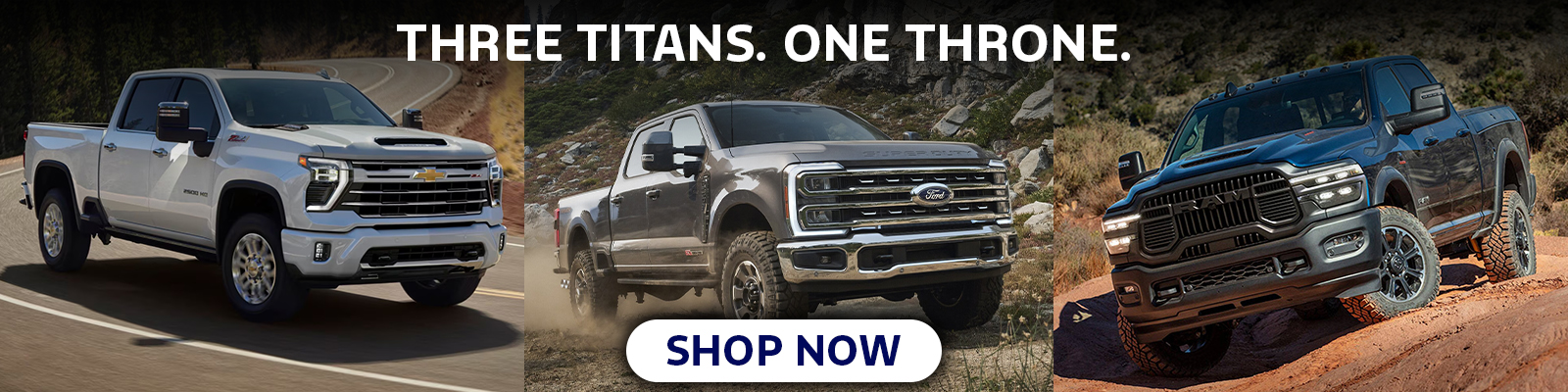
When it comes to heavy-duty pickup trucks, three names dominate the conversation—Ford F-250, Ram 2500, and Chevy Silverado 2500. But when the dust settles, the Ford F-250 stands tall as the clear leader. Engineered for those who demand uncompromising strength, cutting-edge technology, and real-world capability, the Ford F-250 is built to outwork and outlast the competition. Experience its commanding power and smart innovation firsthand at Preston Ford Commercial Vehicle Center today.
Built for Maximum Power and Performance
The Ford F-250 delivers best-in-class muscle with its available 6.7L High Output Power Stroke® V8 Turbo Diesel, generating jaw-dropping torque and monumental towing power—up to 23,000 lbs. with a gooseneck setup. Paired with a 10-speed automatic transmission, the Ford F-250 effortlessly combines brute strength with refined control, setting a new benchmark for heavy-duty performance. The Ram 2500 earns praise for its comfort and smooth ride, while the Chevy Silverado 2500 focuses on reliability. But when it comes to sheer capability and confidence under pressure, Ford’s Power Stroke engine and advanced transmission give the Ford F-250 an undeniable edge.
Engine Options That Outperform
Ford gives drivers more freedom to choose how they power their day—from the efficient 6.8L gas V8 to the unstoppable 6.7L Power Stroke Turbo Diesel. The Ford F-250 dominates in torque output, compression ratios, and towing stability, ensuring it’s always ready for the toughest hauls. The Ram’s Cummins® diesel and Chevy’s Duramax® are respectable alternatives, but neither delivers the balance of power, control, and refinement found in the Ford F-250 lineup.
Smart, Comfortable, and Tech-Forward
Inside, the Ford F-250 Crew Cab is every bit as impressive as its exterior. Designed for comfort and convenience, it offers best-in-class seating, a sleek touchscreen infotainment system with Android Auto™, and a suite of driver-assist technologies like Adaptive Cruise Control, Trailer Coverage, and Blind Spot Information System.
From worksite to weekend, the Ford F-250’s interior feels premium and functional—available in trims that range from durable work-ready setups to luxury-grade finishes featuring leather seats, steering wheel controls, and even a panoramic sunroof.
Ram’s interior leans toward luxury, and Chevy’s toward practicality—but Ford delivers both comfort and command in one package.
Towing and Payload: Ford’s Unmatched Strength
When it comes to heavy lifting, nothing beats the Ford F-250. Equipped with the Power Stroke Diesel, it confidently out-tows and out-hauls both Ram and Chevy rivals. With Pro Trailer Backup Assist™, even the most challenging trailer maneuvers become stress-free and straightforward. The Ram 2500’s towing capacity approaches 20,000 lbs., and the Chevy Silverado 2500 holds its own for conventional towing. But only Ford combines brute strength with precision technology, making it the most capable truck for both commercial and recreational needs. Ford Super Duty doesn’t just tow—it dominates. With up to 23,000 lbs. of gooseneck towing power and a 4,234-lb. payload capacity, this beast means business. Whether you’re hauling with a conventional, 5th-wheel, or gooseneck setup, available packages boost strength, stability, and safety. Add in smart tech like Integrated Trailer Brake Control and selectable drive modes, and every job feels rock-solid and effortless.
Built to Last, Engineered for More
Durability defines the Ford F-250. Its military-grade aluminum alloy body reduces weight while enhancing strength, and its high-strength steel frame delivers lasting reliability on any terrain. Ford’s decades of innovation—from the Ford F-150 Raptor® to the Ford F-250 Platinum®—shine through in every Ford F-Series model, ensuring toughness isn’t just a claim, but a legacy.
Value and Ownership
With competitive starting prices and a wide range of trims, the Ford F-250 offers exceptional value across the board. Its lower maintenance costs, advanced driver-assist features, and unmatched towing leadership make it a smart investment that continues to pay off for years to come.
Final Verdict: The Ford F-250 Wins
In the ultimate battle of heavy-duty pickups, the Ford F-250 takes the crown.
- Best for: Power, towing, and advanced tech
- Ram 2500: Great ride comfort, but trails in capability
- Chevy Silverado 2500: Reliable, yet less commanding
Whether you’re conquering job sites or cruising the open highway, the Ford F-250 delivers the confidence, strength, and innovation that today’s drivers demand. See why America keeps coming back to Ford’s Super Duty lineup—where capability meets confidence. Visit Preston Ford Commercial Vehicle Center to view the heavy-duty champion today!
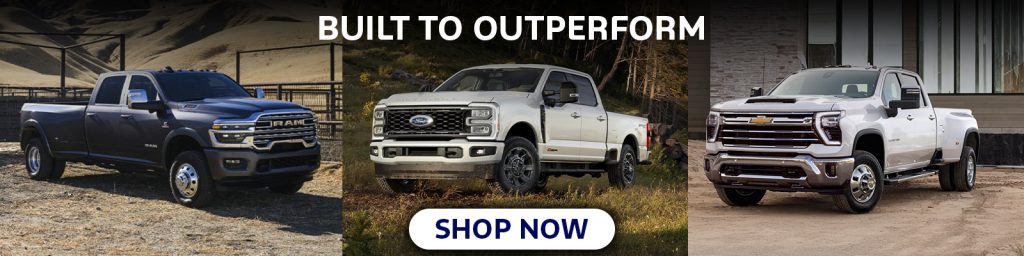
Which Truck Leads the Pack?
When comparing the Ford F-350, Ram 3500, and Chevy Silverado 3500, it’s clear you’re looking at the toughest contenders in the heavy-duty truck world. These one-ton powerhouses are built to handle serious payloads, long hauls, and demanding worksites. But when it comes to class-leading towing capability, refined ride quality, and proven durability, the Ford F-350 continues to set the standard. Whether you’re upgrading your work truck, daily driver, or towing rig, Ford’s balance of power, comfort, and long-term reliability makes it a standout choice. Come see the winner of the heavy-duty truck lineup at Preston Ford Commercial Vehicle Center!
Ford F-350: Built Tough for a Long Time
The Ford F-350 remains a top pick for those who value capability and innovation. Featuring the legendary Power Stroke® diesel V8 and available gas engine options, the Ford F-350 can handle extreme towing with confidence. Its payload capacity and towing capabilities are best-in-class, giving it an edge over comparable models from Ram and Chevy, as seen in previous model year tests.
The Ford F-350 Lariat® and Ford F-350 Platinum® trims offer advanced safety features like Adaptive Cruise Control and BLIS®, ensuring comfort on long distances and better control of the rear end when pulling a 5th wheel. From leafsprings to rear wheels, every detail supports maximum strength. For Ford fans, this is more than just a new truck — it’s a legacy of Ford Super Duty engineering.
With torque climbing to 1,200 lb.-ft. and a refined 10-speed transmission, it’s clear why many call it the best diesel truck in America. When looking at the lineup, the new Ford F-350 always dominates comparisons.
Ram 3500: The Muscle of the Cummins® Engine
Ram trucks have carved a loyal following thanks to the Ram Cummins lineup. The Ram 3500, powered by a Cummins diesel engine, delivers incredible pulling strength and high-output torque. However, even with its diesel reputation, major issues like fuel pump, glow plugs, and coldstart problems have frustrated long-term owners.
In side-by-side reviews (Ford F-350 vs. Ram 3500), the only thing that keeps Ram in the game is its torque advantage. Still, over the long term, Ford’s durability outshines it. While Ram 2500 and Ram 1500 offer smoother rides, the Ram 3500 remains a brute force option that suits those with personal preference for the heritage of Ram trucks.
The front-end design and updated trim level interiors bring refinement, but buyers should carefully weigh the price ranges, reliability, and fuel economy before committing. When compared to Ram, Ford still wins when long-term dependability matters most.

Chevy Silverado 3500 HD: Balanced Power and Comfort
Chevrolet brings confidence to the road with the Chevy Silverado 3500 HD. This truck combines the Duramax® diesel engine with a 10-speed transmission, delivering a better ride than most Ram 3500 setups. The Chevy Silverado lineup—especially the Chevy Silverado 3500 High Country and base model trims—appeals to buyers who value stability and refinement over sheer muscle. Chevrolet Silverado trucks are renowned for their smooth handling, particularly when towing a fifth-wheel trailer or traveling long distances. However, when tested versus Chevy, the Ford F-350 consistently pulls ahead in towing capabilities and payload capacity. While the Chevy Silverado 3500’s exhaust system, cylinder head, and V8 engine deliver reliability, it doesn’t match Ford’s advanced tech or powertrain innovation.
Performance and Capability: The Numbers Tell the Story
When comparing Ford F-350 vs. Ram 3500 vs. Chevy Silverado 3500, the Ford F-350 leads in both diesel engine power and efficiency. It also offers gas engine options for those who prefer traditional fueling. Ford’s fuel tank and engine options are designed for hauling heavy loads over long distances, while the adaptive features make towing safer and easier. The Ford F-350 offers an impressive maximum towing capacity of up to 37,600 lbs. with dual rear-wheel drive and a gooseneck hitch, plus a maximum payload of 8,000 lbs. Ram’s Cummins engines offer raw power but can’t match Ford’s balance of strength and dependability.
For anyone considering a test drive or comparing new vehicles at Preston Ford Commercial Vehicle Center, the Ford F-350 is worth a look. Whether you’re upgrading from last year’s truck or making a big purchase for your business, the Ford stands tall.
Final Verdict: Making an Informed Decision
At the end of the day, choosing between these heavy-duty trucks comes down to personal preference and how you plan to use the vehicle. The Ford F-350 offers the best combination of performance, reliability, and cutting-edge tech. The Ram 3500 packs torque and tradition, while the Chevy Silverado 3500 HD brings comfort and refinement.
For truck enthusiasts, this isn’t just about specs—it’s about finding the right choice that fits your lifestyle. If you’re hauling heavy loads, towing 5th wheels, or driving long distances, Ford’s Power Stroke® engine and iconic Super Duty design make it the best truck in its class.
Good news: whether you’re loyal to Ford, Ram, or Chevrolet, each has made strides in performance and reliability. But if you want a new truck that can do it all—from driving from jobsite to jobsite to hauling equipment—the Ford F-350 still comes out on top. Head to Preston Ford Commercial Vehicle Center to explore our Ford Super Duty lineup today!
Connect with us

